The Stories We Tell Ourselves
NOTE: If you’d rather listen than read, get the audio here.
“I’m not dealing with a hangry Ashley,” my friend said as he adamantly ushered me to breakfast on our first day of vacation.
He wasn’t wrong.
In all the years he’d known me, “I don’t do hunger well” was quite true. If I skipped breakfast, by 10 a.m., I’d be shaky, nauseated, and ready to punch someone in the throat.
But that was then.
Present Day Ashley just did a 3 day fast—Three. Full. Days. Without. Food—and barely blinked an eye.
How? And, more importantly, why?
It’s All About Perspective
“There is nothing either good or bad, but thinking makes it so.”
That’s a line from Shakespeare’s Hamlet. The Bard scooped every cognitive psychologist, mindset coach, and self-help guru by centuries.
That’s because the quality of your life isn’t determined by what happens to you. It’s how you think about what happens that really matters.
On a recent walk-and-talk with my wise friend Gomez, he commented, “The difference between starving and fasting is perception.”
He’s right. It’s the same physiological experience, but the psychological one is significantly different. One feels harmful, while the other feels healthful or meaningful. Who decides?
Is it you?
Is it your mind?
One of the coolest, and potentially most detrimental, functions of our minds is meaning-making.
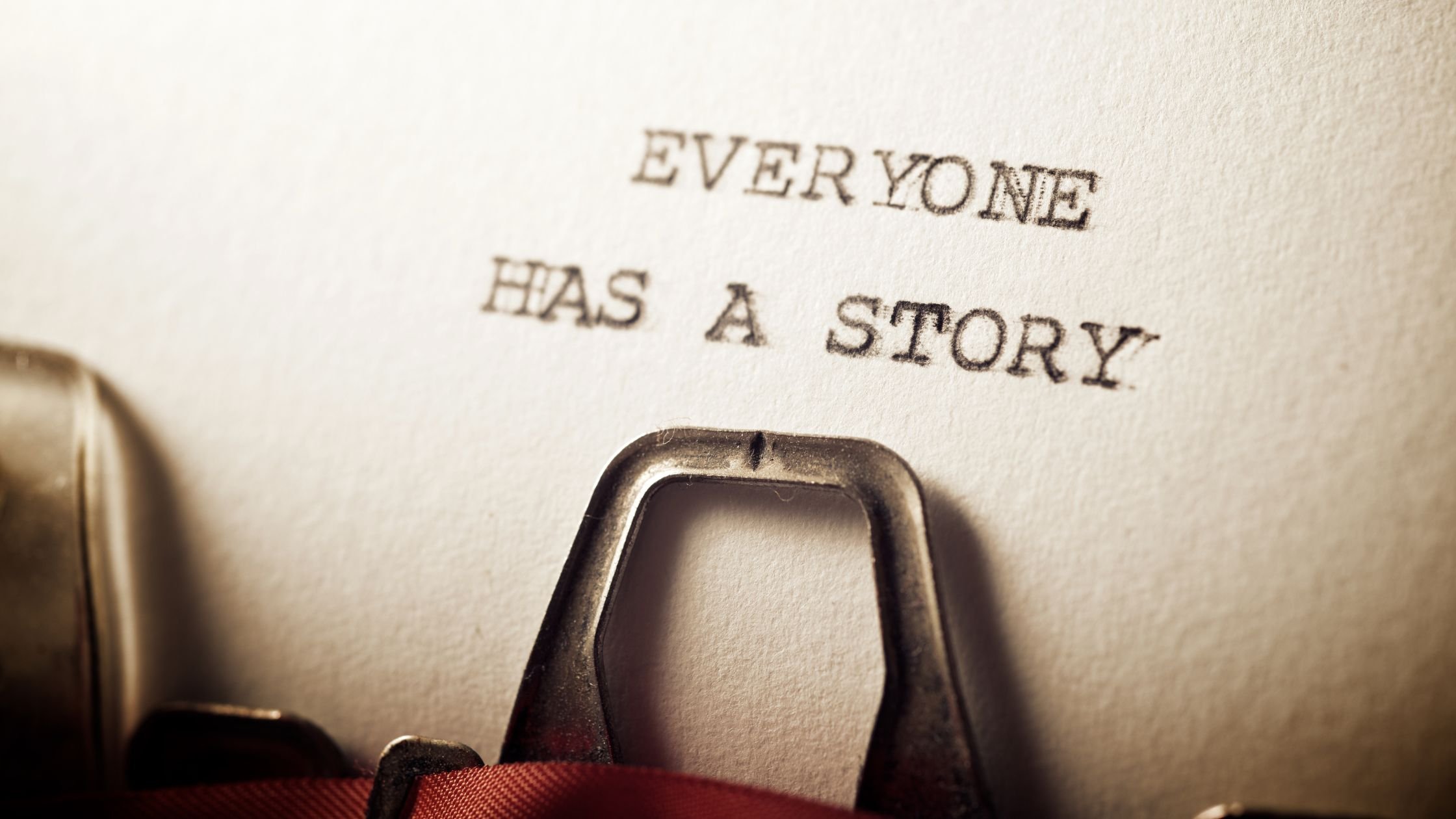
Our minds are master storytellers. They continually weave tales about our experiences, telling us what they mean so we know what to do about them and what to do with them. They draw conclusions about who we are as a result of these experiences and what people like us can and can’t do.
Identity
Those stories our minds tell us about ourselves are what we psychologists call identity.
Do not mistake these stories for facts, though. There is no fundamental “truth” of who you are or who I am. The notion that there is a core “real me” is faulty. Our identity — like any story — can be edited, revised, or discarded altogether.
I don’t do hunger well was simply a story that seemed true at one point but no longer does.
Liberal. Christian. Vegan. Unlucky. The victim. A leader. Tough. Good with money. The good girl. Southern. Imposter. Outspoken. Less than. Shy. Unwanted. Weak. Fragile. The only one who can or will. These facets of identity are all stories. Some may be more recognizable than others, but they are stories, nonetheless.
What story are you wearing as your identity right now? And is that even who you want to be?
Changing the Story
The stories we tell ourselves matter. They dictate the choices we make, the actions we take, and how we respond in the face of challenge, setback, and defeat.
Watch how you talk to yourself, or more aptly, how your mind talks to you.
If you don’t like it, flip the script. Think new thoughts. Tell yourself new things.
Yes, it will sound like bullshit… at first. Yes, it will feel fake… at first. But if you stick with it, it will start to stick.
Our minds have a little glitch we can take advantage of here. We have a cognitive bias called the illusory truth effect that makes things that we hear repeatedly feel true (even if they’re not).
So bring on the positive affirmations. Tell yourself the new story 3 million times a day, and talk your way into a new identity.
But know that talk is cheap, and actions speak louder than words.
Act As Though
You know it as “fake it til you make it,” but psychologists call it “act as though.” Do the things that your new, desired identity dictates. Act like the person you want to be… and eventually you’ll be that kind of person.
Act first. The beliefs will follow.
If you want to be creative -> make something.
If you want to be generous -> give something.
If you want to be kind -> do something nice.
If you want to be healthy -> eat broccoli.
If you want to be -> do.
It sounds simple in theory, but sometimes acting as though is actually quite difficult. When you try to change the story, your mind will tell you that you’re messing up. If you persist, it’ll freak out: What are you doing?!?! This isn’t the script. You’re breaking the rules! Enter anxiety, insecurity, and distress.
Do not mistake that internal discomfort as a sign that you’re doing anything wrong, though. It just means different, my dear friend, and contrary to what our adorable little minds often say, different does not mean bad.
In fact, I’d venture to say that different is good when it comes to growth. After all, more of the same will get you more of the same.
Curiosity Is the Key
Back to the original questions: How and why did I voluntarily make myself uncomfortable by denying food for days on end?
Curiosity is the short answer.
I’ve heard a lot about the physical and mental benefits of this practice, but I wanted to see for myself. I was curious what it would feel like. I was curious about what would happen.
And I was curious if I could do it.
I allowed myself to wonder: I wonder what this will be like? I wonder how my body will feel? I wonder how it’ll change over time? Tapping into curiosity like this allowed me to take a psychological step back from what I was experiencing and to act as an observer of what was unfolding inside me.
I once heard someone say, “You are the pond, and your thoughts and feelings are the fish.”
Call it mindfulness. Call it psychological flexibility. I don’t care. Just call it helpful.
Being able to separate yourself from your internal experiences makes it a heck of a lot easier to tolerate them when they’re uncomfortable. Curiosity is the key to getting that distance.
Ultimately, the fast wasn’t life-changing, but it was valuable. While I didn’t reach unprecedented levels of mental clarity, I also wasn’t wholly miserable, either, to my surprise. What I took away from it was affirmation that I am psychologically strong, gritty, and capable of tolerating hunger without resorting to violence. Perhaps one of the most useful things, though, is that I proved to myself that I can count on me to follow through with what I say I’m going to do, even when it’s hard.
Doing Hard Things
If you want to become the kind of person you want to be who does the kinds of things you really want to do, you are going to have to do hard things. Becoming a better version of you, in whatever capacity that is, won’t be easy.
Personally, I am someone who does hard things. That’s part of my identity, and it’s a part I’ve built through repeatedly challenging myself, running experiments, and willingly making myself uncomfortable.
I’d encourage you to make it part of your identity as well.
When the story that feels true for you is that you can do hard things, you can handle challenge and discomfort, your world shifts.
Anxiety goes down because you know you can trust yourself to do what you need to and to get through whatever life throws your way.
Confidence goes up for those same reasons.
Your stores of mental toughness, discipline, and willpower grow, as does your success.
If you find yourself reading this, thinking “But Dr. Ashley, I could never…” I’ll challenge you to pause and reconsider. Is it that you can’t or that you just haven’t yet? What would happen if you did? What would happen if you gave it a try? If you were willing to push yourself, to prove to both you and your mind that you can, in fact, tolerate being uncomfortable?
What would happen if you were willing to persevere in the face of some inside ick, those unpleasant thoughts or feelings, even for just a little bit? What if you threw your shoulders back and said, “Not today, mind! You’re not the boss of me!”
What if you said, “Watch me!” and did the hard thing?
Regardless of the outcome, there will be value in the experience. You will be recognizing that the story of you is exactly that: a story. And you, not society and not your mind, are the author. Make yours a bold autobiography.
“The difference between starving and fasting is perception.”
Are you ready to live a bolder, happier life?
Subscribe to The Way I See It monthly newsletter to get science-backed insights and inspiring stories delivered straight to your inbox.